

What Nigerian Food Businesses Can Actually Learn From Online Dragging.
Every food business owner, chef, or restaurateur knows the sting of a bad review. You open TripAdvisor, Google, or Instagram comments and find a one-star rating accompanied by a scathing remark. At first, it is easy to feel frustrated or even offended. But for Nigerian foodpreneurs, these reviews can be more than just a blow. They can be priceless business lessons if approached with the right mindset.
Let’s consider this real, anonymized example from TripAdvisor:
“I came for breakfast with my family, but we waited 40 minutes for food — and when it came, the sausage rice had just one tiny piece of sausage. The server couldn’t even make coffee. Won’t come again.”
This is quite harsh, but there are several lessons to learn from this review. Let us dive into that.
Lesson 1: Waiting Time Matters More Than You Think
Long waits are a universal pain point, but in Nigeria, they are particularly sensitive. Nobody wants to feel like they have been left waiting “like for a NEPA prepaid token recharge.” As noted by CarbonaraApp, long wait times often lead to complaints about slow service, missed expectations, and dissatisfaction.
Restaurants should set realistic wait times, communicate delays clearly, and train staff to manage customer expectations proactively. A simple, honest update can turn frustration into understanding.
Lesson 2: Portion Sizes and Menu Accuracy Are Crucial
The reviewer’s disappointment about “one tiny piece of sausage” highlights a common problem which is that customers expect consistency and transparency. Whether it is portion size, presentation, or ingredients, what is promised should match what is delivered.
Standardize portions, ensure menu descriptions reflect reality, and have kitchen staff double-check orders before they leave the kitchen. Consistency builds trust, and trust builds loyalty.
Lesson 3: Service is More Than Smiles
In this same review, the customer notes that the server seemed disengaged. In Nigeria, hospitality is not just about delivering food. It is about making guests feel welcomed and valued. A bad attitude, even when unintentional, can overshadow the best dishes on the menu.
In Nigeria, reviews spread fast, often going viral on social media. Customers are vocal, and online word-of-mouth can make or break a restaurant.
So what is the keynote and actionable steps from all these lessons
Handling bad reviews effectively is essential not just for survival but for growth.
To turn bad reviews into good lessons, Nigerian foodpreneurs can take these steps:
- Review your top three most-mentioned complaints and prioritize fixes.
- Hold short staff meeting to address these issues, from kitchen consistency to service etiquette.
- Update wait time expectations on menus, signage, and social media channels.
This is why we are hosting a Restaurant Management Course designed to help food business owners move from reacting to problems to building structures that prevent them in the first place. The course focuses on creating repeatable systems for operations, leadership, menu execution, inventory control, and overall efficiency – the exact areas highlighted by customer complaints and online reviews.
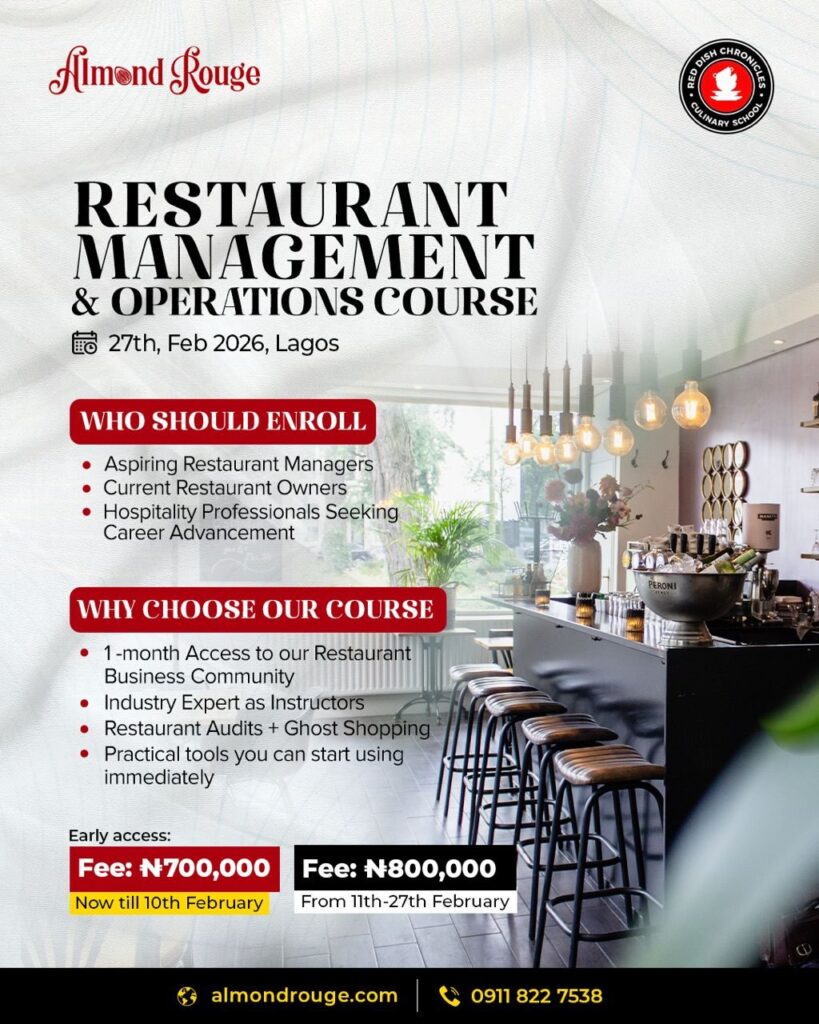
To register for the course, click the link here
Alongside this, we are also hosting a Financial Management Webinar for Restaurant Owners, because many operational issues are closely tied to money decisions — from menu pricing and portion control to staffing and throughput. Understanding your numbers helps you make better choices before problems reach your customers.

To register for the webinar, click the link here
For more enquires, call or message is on 09118227538